
Blouse alterations · Vesu, Surat
What can—and cannot—be altered in a blouse?
Some fit problems can be corrected beautifully. Others are limited by seam allowance, construction, fabric or embroidery. This guide explains what the atelier checks before making a promise.
- Start with clear photos
- Feasibility confirmed first
- Alter or restitch honestly
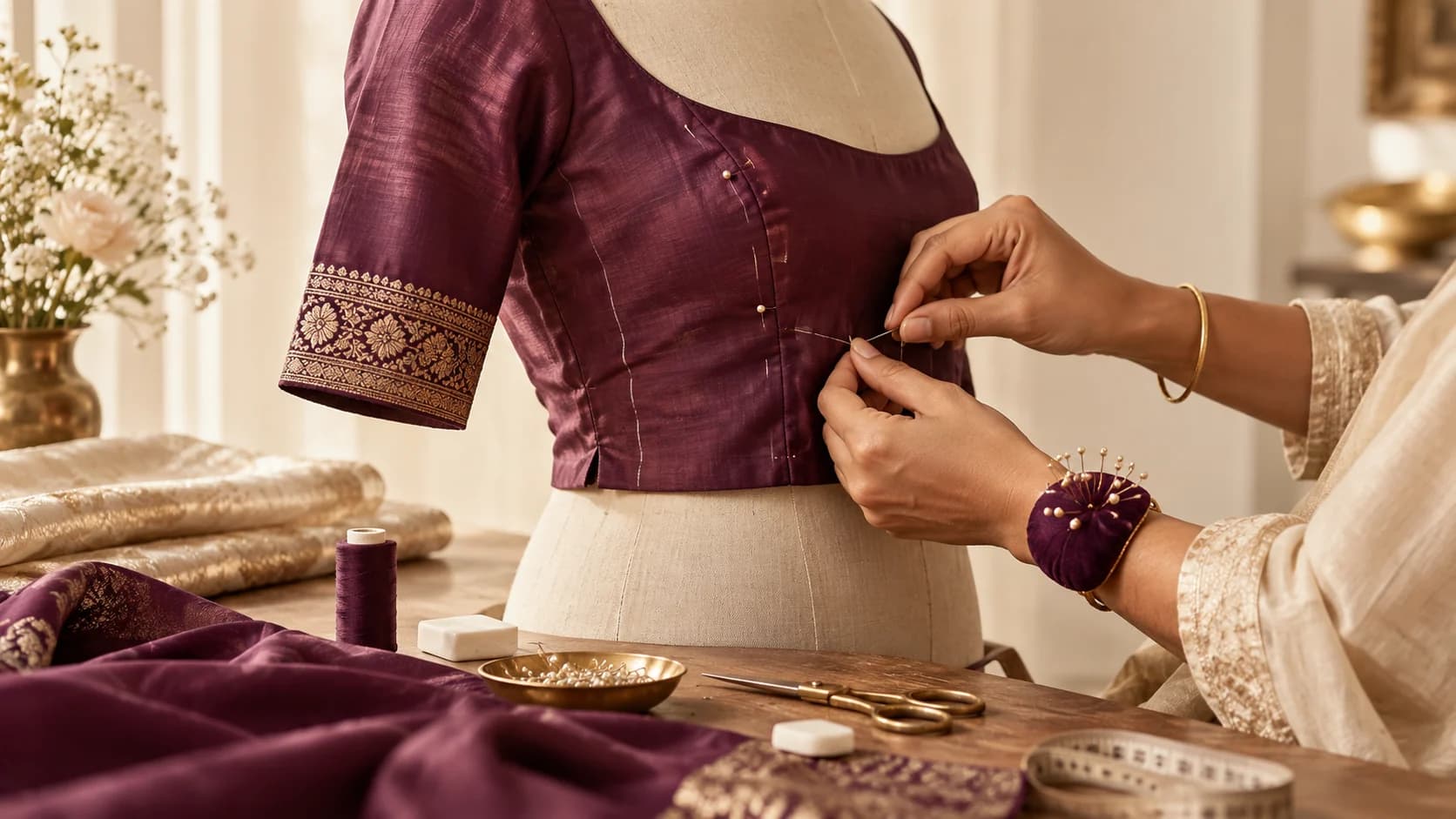 Illustrative atelier scene
Assessment guide
The garment decides the answer.
These are common possibilities, not guarantees. A physical inspection is the only reliable way to confirm the work, price and timeline.
The inside seams decide what is possible
A blouse can only be loosened when its side seams, princess seams or centre-back construction contain usable allowance. Lining, piping and embroidery can reduce that allowance. Photographs help with an initial opinion, but the atelier must inspect the inside before confirming the change.
A loose blouse is often easier to take in
Extra room may be removed at the side seams, back seams or darts, depending on the cut. The goal is not simply to make the blouse smaller: the bust point, neckline, armhole and motif placement still need to remain balanced.
Sleeves and armholes have limits
Sleeve width and length can sometimes be adjusted, and a new sleeve may be possible when matching fabric is available. A tight armhole, heavy border or sleeve with dense embroidery is more restrictive because opening one area can disturb another.
A neckline may be lowered more easily than raised
Lowering a neckline can be possible when the construction and embroidery allow it. Raising a deep neckline usually needs matching fabric, lace, mesh or a designed insert. The solution should look intentional and still support the blouse properly.
Padding and bust shaping need a full fit check
Cups can sometimes be repositioned or replaced, but padding is connected to the blouse shape, lining and neckline. If the base cut does not suit the required support, rebuilding or restitching may give a cleaner result than changing the cups alone.
Embroidery and delicate fabric increase the risk
Zari, sequins, beads, old silk and fragile seam edges may mark, fray or lose motifs when opened. We check the material before agreeing to work and explain any visible joins or limitations before the alteration begins.
Sometimes restitching is the better choice
A blouse may be unsuitable for alteration when there is no seam allowance, the shoulders and bust point are both misplaced, the fabric is weak, or the cost of rebuilding approaches a new blouse. An honest assessment should compare both options.
Explore custom blouse starting pointsSend the right photographs first
Share clear front and back views, the inside side seams, the closure, sleeves and the exact area that feels wrong. Add your event date and say whether matching fabric is available. We will tell you whether a studio assessment is the sensible next step.
Contact the Vesu atelier
Need a hand?
Want us to assess your blouse?
Send front, back and inside-seam photographs with the fit problem and event date. We will explain the safest next step.